


Table of contents
Product certification in Georgia: labelling and technical regulations
2026-10-12

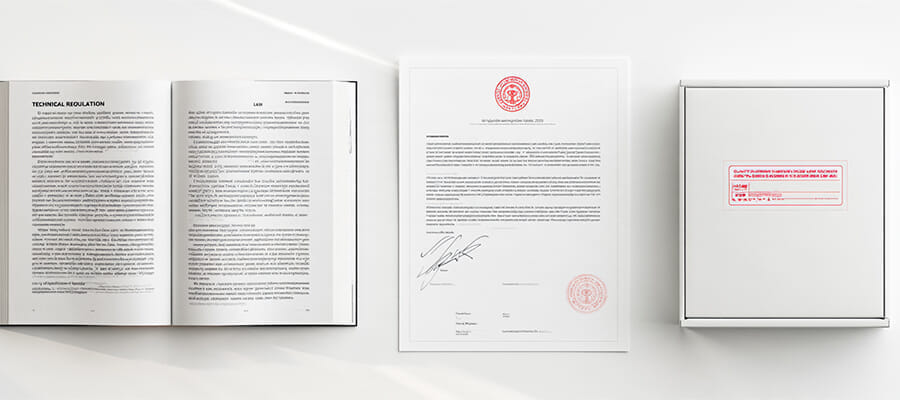
Product certification in Georgia, labelling and technical regulations exist so that manufacturers and importers can show that their goods meet the established requirements. No single set of rules, however, covers every product. Standard particulars on the packaging suffice for some goods, whereas others have to pass conformity assessment before sale.
A great deal depends on the category a product belongs to and on what is required of that class of goods. Where a technical regulation covers a product, its manufacturer or importer has to follow the procedure the regulation prescribes and draw up the documents it calls for.
The main forms of conformity assessment in Georgia
The first requirement facing manufacturers and importers is conformity assessment. Such assessment is mandatory in some cases and voluntary in others. Mandatory assessment concerns specified categories of goods. Its aim is to confirm that the goods meet established safety requirements and any further conditions in force for their type.
Examples of regulated categories are certain types of industrial equipment, medical products, agricultural goods and veterinary biological preparations. Each category has its own rules, so the requirements of one technical regulation do not carry over to another product.
Voluntary conformity assessment in Georgia is at the manufacturer's discretion. Manufacturers turn to it when a product's characteristics require further confirmation or buyers need a document certifying conformity with specified requirements. Georgia also permits the certification of services, although such certification does not concern product characteristics. By the same token, a licence or permit for a particular sector should not be equated with product certification, and some sectors have their own permitting and registration procedures.
Product labelling in Georgia: particulars the product must carry
Separate rules govern the information a manufacturer discloses to consumers. For food products, for example, special requirements determine what the packaging and the label must state. As a rule, the information must allow buyers to identify exactly what they are buying and who made it, and to understand how to use it.
The required particulars vary with the kind of product and may include, for example, those listed below.
-
product name
-
constituent components
-
quantity or volume
-
manufacturer details
-
country of origin
-
shelf life
-
storage conditions
-
warnings
For certain goods the list extends further. Where special conditions of storage, operation or use apply, the consumer receives the corresponding information. Under the rules on product labelling in Georgia, the labelling information appears on the goods themselves, on their packaging or on the label. Accompanying documents also carry the necessary data. Regulated items must, in addition, comply with the specific regulation governing them.
Which goods are subject to mandatory conformity assessment
Not every product needs a mandatory certificate, so the manufacturer or importer establishes whether the goods fall into a regulated category before they reach the market. Where a technical regulation extends to a product, it contains the basic requirements and also states how conformity is to be confirmed. Depending on the regulation, mandatory conformity assessment in Georgia may involve testing, a declaration, an accredited body or other prescribed steps.
Special requirements are in force in particular for certain kinds of machinery, equipment, construction products and electrical goods. Belonging to one of these groups does not in itself mean that an item will need the same set of documents as other items in that group. This is a matter for the specific regulation governing that item.
Before work on a product begins, the usual steps run as follows.
-
identifying the appropriate category
-
applying the relevant technical regulation
-
checking whether mandatory conformity assessment is necessary
-
determining which documents lawful market entry will require
Need help with product certification in Georgia?
Get professional assistance with product certification and compliance in Georgia. Our specialists can help you identify the applicable technical regulations, understand certification requirements and prepare the necessary documentation for your products.
The substance of a technical regulation
A technical regulation is the instrument that lays down mandatory rules for a particular category of products. It identifies the goods within its scope, the requirements they must satisfy and the method for confirming conformity. Such requirements may concern safety and product characteristics, as well as packaging and labelling, among other matters. Some regulations also lay down the procedure for conformity assessment in Georgia and the conditions under which such goods may enter the market.
The relevant registry lists the technical regulations in Georgia currently in force. In each individual case, the document to consult is the one that covers the category concerned. No general list of requirements applies uniformly to all products. Conformity documents merit separate attention and may be subject to rules on their language and translation. It is advisable to check these rules against the specific conformity assessment procedure rather than to rely on a single approach for every case.
Recognition of foreign certificates and conformity marking
A conformity document may have been issued outside Georgia. However, having such a document does not by itself entitle the holder to use it on the Georgian market without further steps. For certain foreign documents, the law allows recognition without a repeat conformity assessment in Georgia. Recognition depends on the issuing country and on the document's type, and also on whether the conditions laid down have been observed. An English text is accepted; otherwise a notarised Georgian translation must accompany the document.
The conformity mark is a separate issue. It shows that the products have passed the prescribed procedure and conform to the applicable technical regulation. Where the law so provides, an authorised person affixes the mark before the goods enter the market.
Affixing the mark is also regulated. The mark must be clearly visible and legible and must not wear off in normal use. Where affixing it directly to the item is impossible, the mark appears on the packaging and the accompanying documents as the technical regulation prescribes.
Product certification in Georgia: stages and required documents
The starting point is the product itself. Its category must be established, the applicable requirements identified and the right form of conformity assessment determined for the particular case. Next, the set of documents is assembled and a conformity assessment body or laboratory is chosen. Where testing takes place, samples are handed over for that purpose. The conformity document then draws on the test results and other materials.
In general terms, the procedure includes the stages listed below.
-
identifying the applicable technical regulation
-
preparing the technical and accompanying documentation
-
selecting an accredited body where necessary
-
testing the products
-
documenting the assessment results
-
applying the prescribed marking
The product certification requirements in Georgia for each item define the exact list of documents. In practice, the list includes the following.
-
technical description
-
manufacturer information
-
operating instructions
-
test results
-
laboratory test reports
-
information on origin
-
particulars of composition
-
declaration of conformity with standards
Once the procedure is complete, the business receives documents confirming the assessment results. These must clearly identify the type of goods they relate to. Where a technical regulation applies, the whole sequence of steps is best checked in advance, before import or production begins. This shows which documents to prepare before delivery.

Planning to import or sell products in Georgia?
Find out what certification, conformity assessment and labelling requirements may apply to your products. We can help you understand the relevant procedures and prepare for entering the Georgian market.
Certificates of conformity and product requirements
A certificate of conformity is not interchangeable with a declaration. The two are separate documents, both used to confirm that products in Georgia meet the applicable requirements. Which of the two applies depends on the product certification requirements in Georgia for the item in question.
Certificates are issued under the conformity assessment procedure provided for the goods concerned. A declaration confirms the product's safety under the relevant requirements. Georgian legislation expressly lists it among the documents confirming conformity.
Authorised bodies may call for the conformity materials when they inspect regulated products. The certificate, the declaration and the accompanying documents must therefore contain matching data. Particular care should go into the name and model, the type and code, and any other identifying details. An error in even one of these details can cause difficulties during the document check.
For materials in another language, the rules on their presentation and translation must be observed. Certain foreign documents are subject to specific statutory requirements on language and on how the translation is certified.
Conclusion
Product certification in Georgia, together with labelling and technical regulations, involves several distinct procedures. The first step is to establish whether the item in question belongs to a regulated category. After that, it becomes possible to determine the applicable technical regulation, whether conformity assessment is necessary and which documents need preparing.
Correct labelling is no less important. The label has to meet the rules applicable to that particular product and give the consumer the necessary information. A business new to these rules may find it hard to work through all the documents unaided. In that case, it is advisable to seek help from specialists at a consulting agency. They will help identify the applicable requirements, prepare the documents and organise the procedure for product certification in Georgia.
Experience and competencies
Have questions about product compliance in Georgia?
Tell us what products you plan to import, manufacture or distribute in Georgia. Our experts will help you understand the applicable technical regulations, certification procedures and labelling requirements for your business.
Frequently Asked Questions
Who carries out conformity assessment of goods?
Accredited or other authorised bodies carry out the assessment where the law calls for their involvement. The type of product and the procedures laid down for it determine which body takes part.
What information appears on a product label in Georgia?
There is no universal list. The required information varies by category and with the relevant rules. Labels often show the name, composition and quantity. Manufacturer details, shelf life, storage conditions and warnings are also common.
Does a foreign company have to undergo conformity assessment when importing products into Georgia?
Foreign origin does not in itself exempt goods from conformity assessment in Georgia. The importer needs to establish whether the products fall into a regulated category. Where a foreign body has already issued a conformity document, Georgia may in some cases recognise it without a repeat procedure.