


Table of contents
Obtaining a Fishing License in Georgia: requirements, procedure, control
2026-04-28

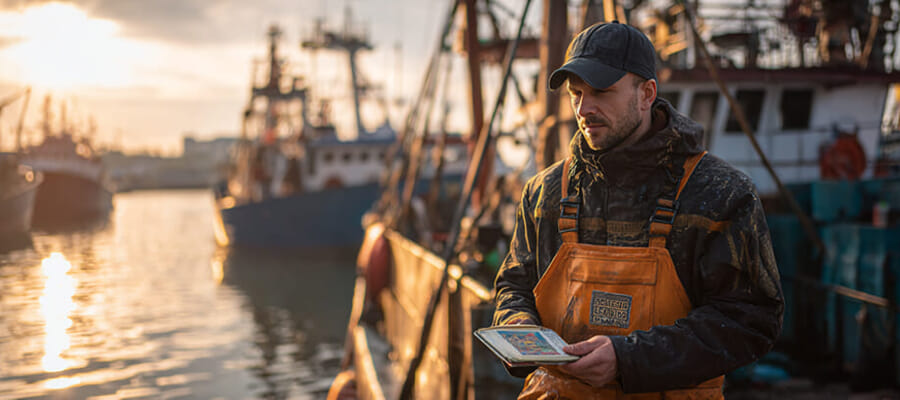
Obtaining a fishing license in Georgia is a must if you plan to engage in commercial harvesting of aquatic biological resources, take part in auctions for allocated fishing zones, and operate without the shadow of penalties — with clear access to designated waters and fixed quotas. Within the Georgian legal framework, this license acts as a gateway to using a state-owned natural resource. In simple terms, it grants access to water bodies and their reserves under conditions set by the state and formalized in an official permit issued after competitive bidding.
Obtaining a fishing license in Georgia for commercial fishing follows a strictly auction-based route. There’s no shortcut here — the winner is the participant who puts forward the most attractive offer, often defined by the financial bid. Once the auction closes, the right to operate within a specific water area is formally assigned, along with all the limitations and obligations attached to it.
The validity period of such a permit is never open-ended. It is defined in advance and tailored case by case. Unlimited use simply doesn’t exist in this system, as the state keeps a firm hand on how resources are used and reserves the right to revisit and adjust the terms when necessary.
It’s worth noting that the fishing licensing regime in Georgia applies only to commercial activity. Recreational fishing lives in a different legal lane and doesn’t require going through this process at all.
Obtaining a fishing license in Georgia: subject of regulation
Under local law, a fishing license stands as an independent type of authorization tied directly to the use of natural resources. What it really means is gaining the legal right to extract aquatic biological resources from a specific zone or water area, strictly under conditions defined by the state.
Securing a fishing permit in Georgia opens the door to industrial-scale harvesting and clearly outlines the rules of the game: where you can fish, what species you can target, and what limits apply in terms of volume and methods. The very act of obtaining such a license places the operator inside the official resource distribution system, meaning every move is made within a regulated and monitored framework.
Which authorities are involved in fishing licensing in Georgia
The system for allocating rights to use aquatic biological resources in Georgia runs through several state institutions, each handling its own part of the process. This division of roles is not just formal — it matters in practice, because the procedure touches not only the issuing a fishing license in Georgia, but also ongoing supervision, as well as maritime and environmental regulations.
The following authorities take part in the process:
-
Ministry of Environmental Protection and Agriculture.This body shapes state policy in the field of natural resource use and sets the general rules for managing water resources. Through its subordinate structures, it defines how rights to harvest are distributed, including the conditions of use and restrictions tied to specific types of activity;
-
National Environment Agency.Acts as the core authority through which launching fishing licensing in Georgia is carried out in practice. It organizes auctions, publishes the terms, accepts applications, reviews them, and finalizes the results. Once a winner is determined, it formalizes the decision, maintains the official register of issued licenses, and oversees the process on the administrative side;
-
Ministry of Internal Affairs of Georgia.Involved in regulating maritime zones and border control. Its role becomes especially relevant when fishing operations take place in marine waters or involve foreign participants. Through its divisions, compliance with vessel movement rules and border-crossing requirements is monitored;
-
Department of Environmental Supervision.Responsible for checking compliance after the right to harvest has been granted. It verifies that operations match the license conditions and that environmental standards are respected, including limits on fishing methods and overall impact on ecosystems.
This distribution of responsibilities prevents everything from being concentrated in a single authority. As a result, setting up a fishing license in Georgia is not just about gaining the right to operate — it also means entering a structured system of ongoing monitoring and regulatory oversight.
Applying for a fishing license in Georgia: eligibility criteria for applicants
A fishing license in Georgia is open to both individuals and companies, including foreign entities — as long as they meet the established requirements and are ready to play by the rules of a specific auction.
The decision on whether an applicant is admitted is based on general legal standards, but always with a close look at the details of the specific object. That’s why it’s not enough to just meet formal criteria — reviewing the auction terms is essential, since they may introduce extra limitations that directly affect participation.
The criteria for securing a fishing permit in Georgia for commercial operations can be grouped into several key areas:
-
Legal capacity.The applicant must have a clearly confirmed legal status. For a company, this means registration and official records in the registry; for an individual — valid identification data. If someone applies through a representative, a document confirming their authority is required. For foreign participants, recognition of their legal standing within the Georgian jurisdiction is also taken into account;
-
Acceptance of auction terms.Anyone aiming at entering a fishing license auction in Georgia must agree to the conditions tied to the specific resource. This includes limits on timeframes, allowed catch volumes, types of aquatic resources, and technical requirements. Refusing these terms means stepping out of the process entirely, since they form the core of the offer used to determine the winner;
-
Ability to comply with industry regulations.The activity itself must align with technical standards. This covers approved fishing methods, gear specifications, vessel use, and reporting obligations. Falling short here is seen as a direct risk of violating future license conditions;
-
Additional requirements for marine fishing and foreign applicants.When setting up a fishing license in Georgia for marine zones, factors like fishing area boundaries, quota distribution, and vessel movement rules come into play. For foreign participants, extra layers apply — including provisions linked to international agreements and border regulations. These can limit access to certain zones or impose special operating conditions.
In the end, getting into the auction isn’t just about ticking boxes. It comes down to whether the applicant is genuinely prepared to operate within the defined framework of a specific fishing area. Ignoring the fine print of auction terms can easily lead to rejection long before a winner is even chosen.
Need assistance with a fishing license in Georgia?
We provide professional support throughout the process of obtaining a fishing license in Georgia, including regulatory assessment, document preparation, and interaction with the relevant authorities. Our team ensures a structured and compliant approach at every stage.
Applying for a Georgian fishing license: what information needs to be prepared
The file required for securing the right to fish commercially in Georgia is shaped by both legal requirements and the specific terms of the auction. It goes beyond basic registration details and includes materials that show you’re actually ready to operate within the defined framework of resource use.
The documentation for preparing a fishing license application in Georgia can be broadly divided into several groups:
-
Core package.This includes the application to take part in the procedure, identification details of the individual or company, registration data, and information about a representative if one is involved. When applying through an authorized person, proof of their authority is required. In some cases, confirmation of mandatory payments is also attached, if such a condition is part of the auction entry requirements;
-
Data on the resource and terms of use.These details reflect your readiness to operate within set parameters. You specify the types of aquatic biological resources you plan to harvest, expected volumes, timeframes, and the territory. It also includes formal acceptance of restrictions tied to a specific zone or water area. This block helps assess whether the applicant fits the conditions for applying for a fishing license in Georgia under auction terms;
-
Materials on vessels and fishing operations.Required when the activity involves marine waters. This part includes information about the vessel, its technical specs, the operating area, planned timelines, equipment used, and where the catch will be unloaded. In some cases, logistics schemes and operational details are added. This set of data is used to check compliance with requirements specific to marine fishing;
-
Environmental documentation.Submitted if the project falls under environmental assessment procedures. It may include materials describing environmental impact, details of planned operations, and measures aimed at reducing negative effects. Without confirming compliance with environmental standards, the project may face restrictions or not move forward at all.
The final package should clearly identify the applicant and show their ability to work within the established rules. Missing or inconsistent information is usually treated as a solid reason to reject a request for entering the fishing licensing process in Georgia.
How to apply for a fishing license in Georgia: step-by-step process through auction
The process of getting approval for commercial fishing in Georgia unfolds in several clear stages:
-
Choosing the right licensing regime.At this point, the difference is drawn between a fishing license and similar permits (such as aquaculture authorization or vessel approval). The key is to confirm that the planned activity involves harvesting aquatic biological resources from the natural environment — not breeding them or simply operating a vessel;
-
Finding an auction announcement and reviewing the terms.Information about available rights is published on the official platform of the National Environment Agency. The notice outlines the object, territory, term, restrictions, starting price, and the criteria used to select the winner. Every detail matters here, because these conditions define whether participation is even possible;
-
Preparing materials for entering a fishing license process in Georgia.A tailored set of documents is assembled, matching both legal requirements and the specifics of the chosen lot. This includes the future scope of activity — expected catch volumes, timeframes, and technical aspects of operations;
-
Submitting the application and gaining access to the auction.The request is filed with the licensing authority in the prescribed format. Only those who meet the criteria and confirm acceptance of all terms are admitted. Any mismatch with the stated parameters leads to rejection before the auction even begins;
-
Taking part in the auction and shaping the offer.Participants submit financial bids for the right to use the resource. The winner is the one who offers the highest value while fully accepting the operational conditions;
-
Payment and formalizing a fishing license in Georgia.Once the winner is confirmed, the auction amount is paid along with the set out fee. After settlement, an official license certificate is issued, securing the right to use the designated resource;
-
Meeting pre-operational requirements.If additional conditions apply — such as environmental assessments or other approvals — operations cannot begin until these are fulfilled. These obligations are fixed in the documentation and must be respected without exception.
Only after all conditions are met does actual fishing begin. The activity must follow strict limits — from species and volumes to timing, zones, equipment, and reporting. Stepping outside these boundaries can lead to penalties and even the loss of the granted rights.

Need support with fishing license procedures in Georgia?
Our team assists with navigating the requirements and procedures for obtaining a fishing license in Georgia, including compliance review, documentation, and coordination with authorities. We help ensure a clear and efficient process from start to finish.
Validity period and renewal of the permit
A license for using aquatic biological resources in Georgia is always issued for a limited period. The duration is set individually. The decision comes from the licensing authority, which looks at the specifics of the resource, the available volume, and the nature of the planned activity. When defining the term, factors like fishing technology, seasonality, and conservation limits aimed at protecting fish populations all come into play.
The fixed timeframe is written directly into the auction terms and the permit itself. These parameters clearly define how long a particular site or water area can be used.
The option of extending a fishing license in Georgia after expiry does exist, but it is not automatic. It requires a separate approval process involving the government. During the review, authorities look at whether all conditions were followed, whether there were any violations, and whether continued use of the resource is still considered acceptable.
If the original requirements were not respected, or if the conditions for using the natural resource have changed, the extension may be refused. In that case, the rights to the area are put back up for auction.
Fishing License Strategy
Entering the world of commercial fishing in Georgia is not something you approach casually. It requires careful preparation for the auction, a clear understanding of the specific conditions tied to each fishing area, and strict compliance with industry rules. Our company supports this journey end to end — from evaluating your chances of participation to finalizing the license and helping you move into active operations.
Experience and competencies
Start your fishing license process in Georgia
We review your case, clarify applicable requirements, and develop a structured approach to obtaining a fishing license in Georgia. Our team supports each stage to ensure compliance with regulatory standards.
Frequently Asked Questions
Is it necessary to apply for a fishing license in Georgia for commercial fishing?
Yes. Commercial harvesting of aquatic biological resources falls under licensed activities and cannot be carried out based on a simple notification or general permit. The right to use fish resources is granted only through a license. Entering the fishing sector legally in Georgia happens through an auction process, where both the winner and the operating conditions are determined. Without a license, commercial fishing is treated as illegal and may lead to administrative or even criminal liability, including fines and confiscation of catch and equipment.
Can a foreign company participate in the fishing licensing process in Georgia?
Yes, foreign legal entities are allowed to take part. The law does not limit access to residents only, but international applicants must meet the same requirements as local participants. In practice, this means properly structuring legal status, confirming the authority of representatives, and accepting the terms of a specific auction. When operations involve marine areas, additional rules apply — including jurisdictional requirements, vessel registration, and compliance with international fishing standards. In some cases, adapting the project structure to Georgian law is necessary to ensure real compliance with license conditions.
For how long is a Georgian fishing license issued?
The duration is set individually by the licensing authority, based on the characteristics of the resource, its volume, and how it will be used. The exact timeframe is specified in both the auction terms and the permit itself. In practice, the period may vary depending on the type of water body, operational regime, and the economic model behind the project, so there is no single standard term for all cases.
Is it possible to renew a fishing license in Georgia after it expires?
Yes, renewal is possible, but it does not happen automatically. The decision involves government participation and depends on whether the license holder complied with all requirements and whether continued use of the resource remains justified. Extending a fishing license in Georgia requires a separate review and approval process. If violations occurred or if the resource usage framework has changed, the request may be denied, and the rights to the area will be returned to auction.